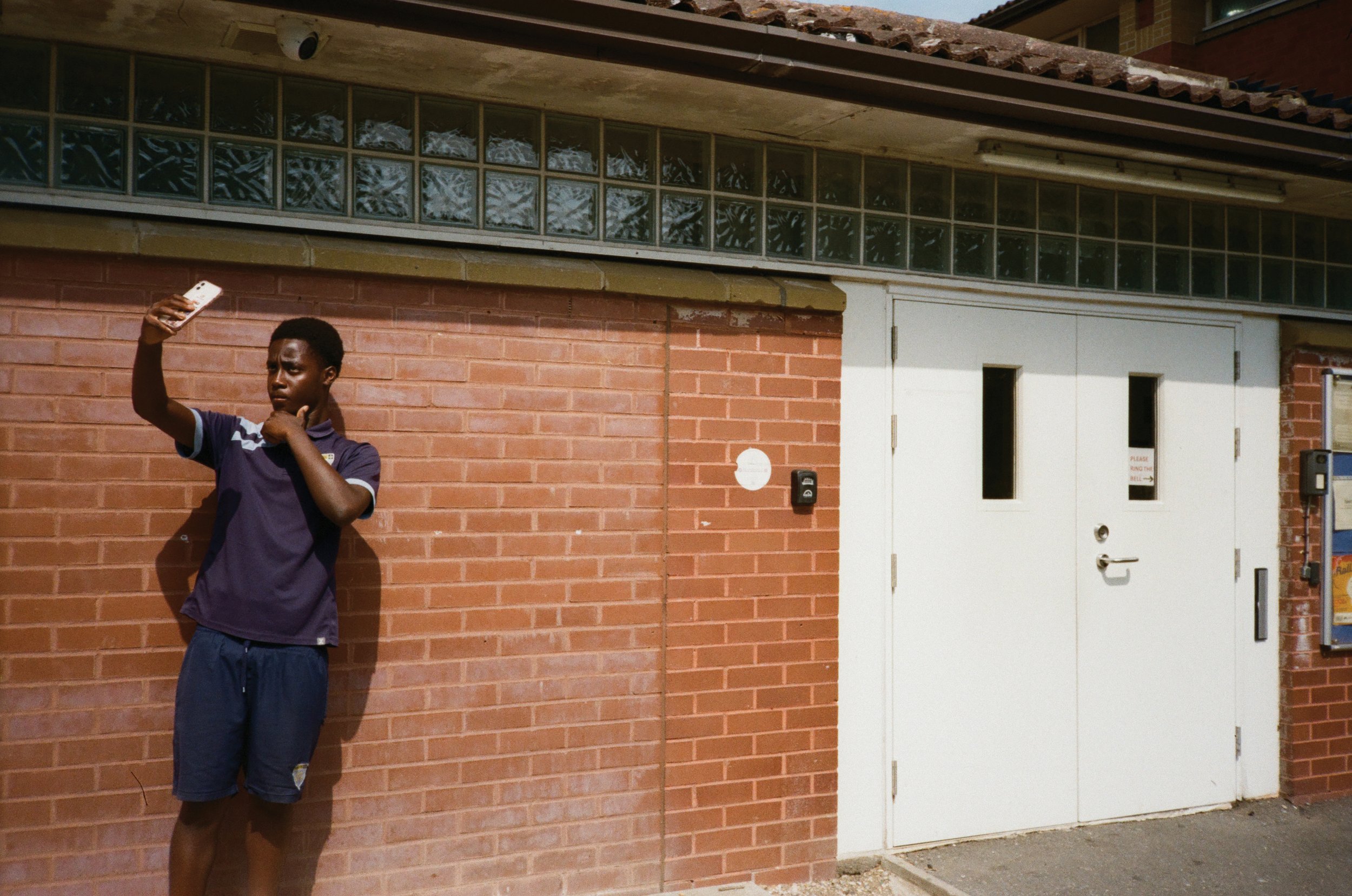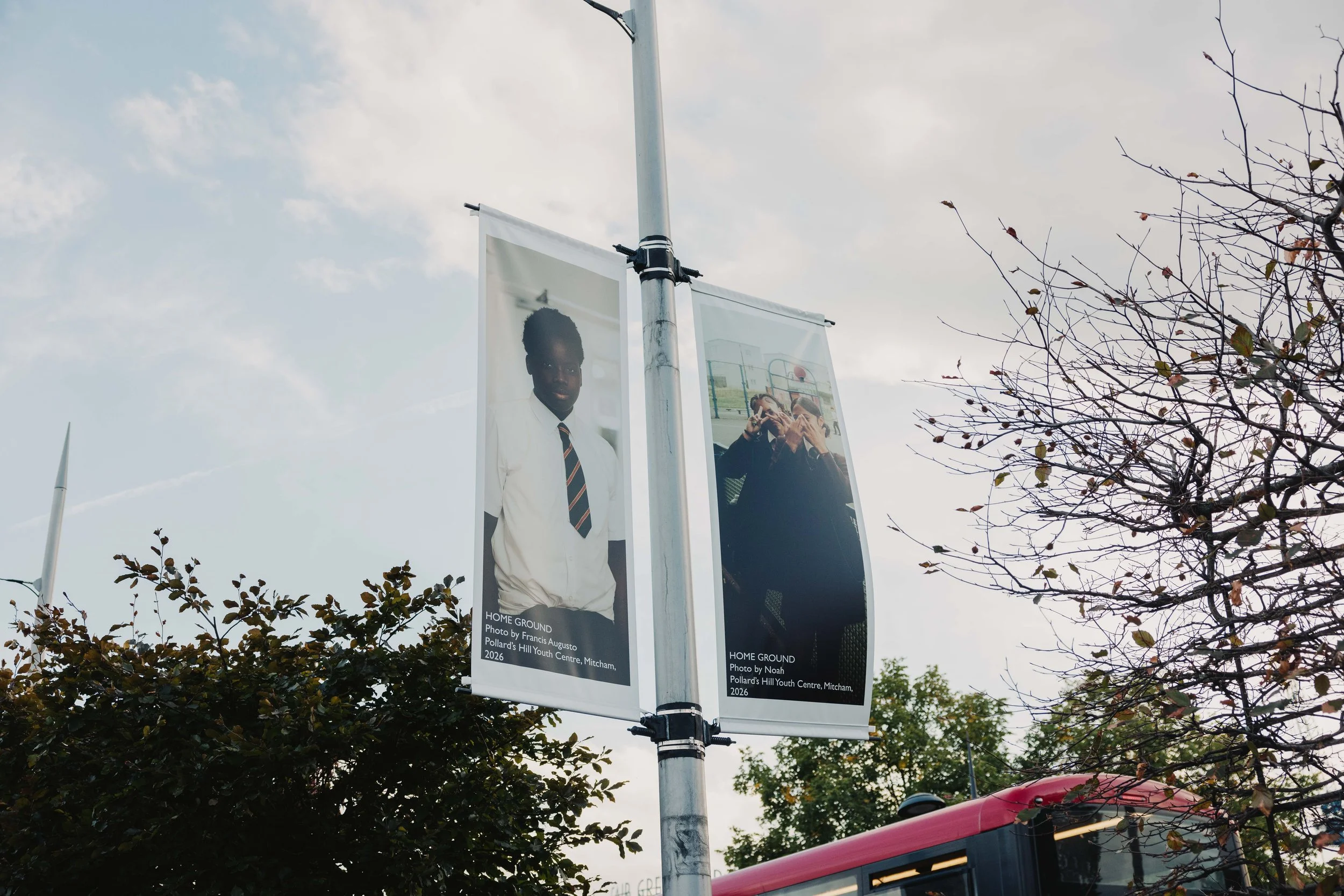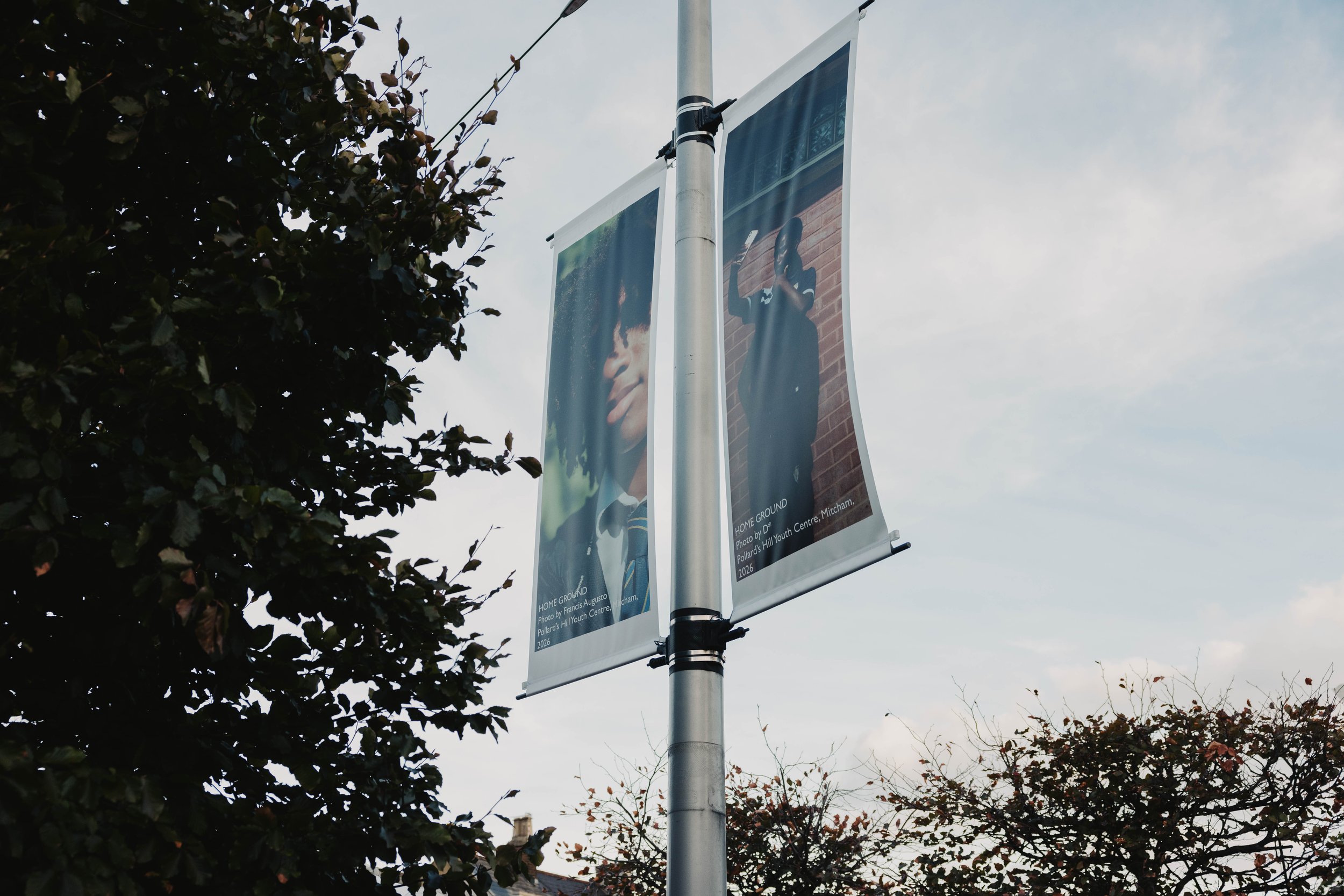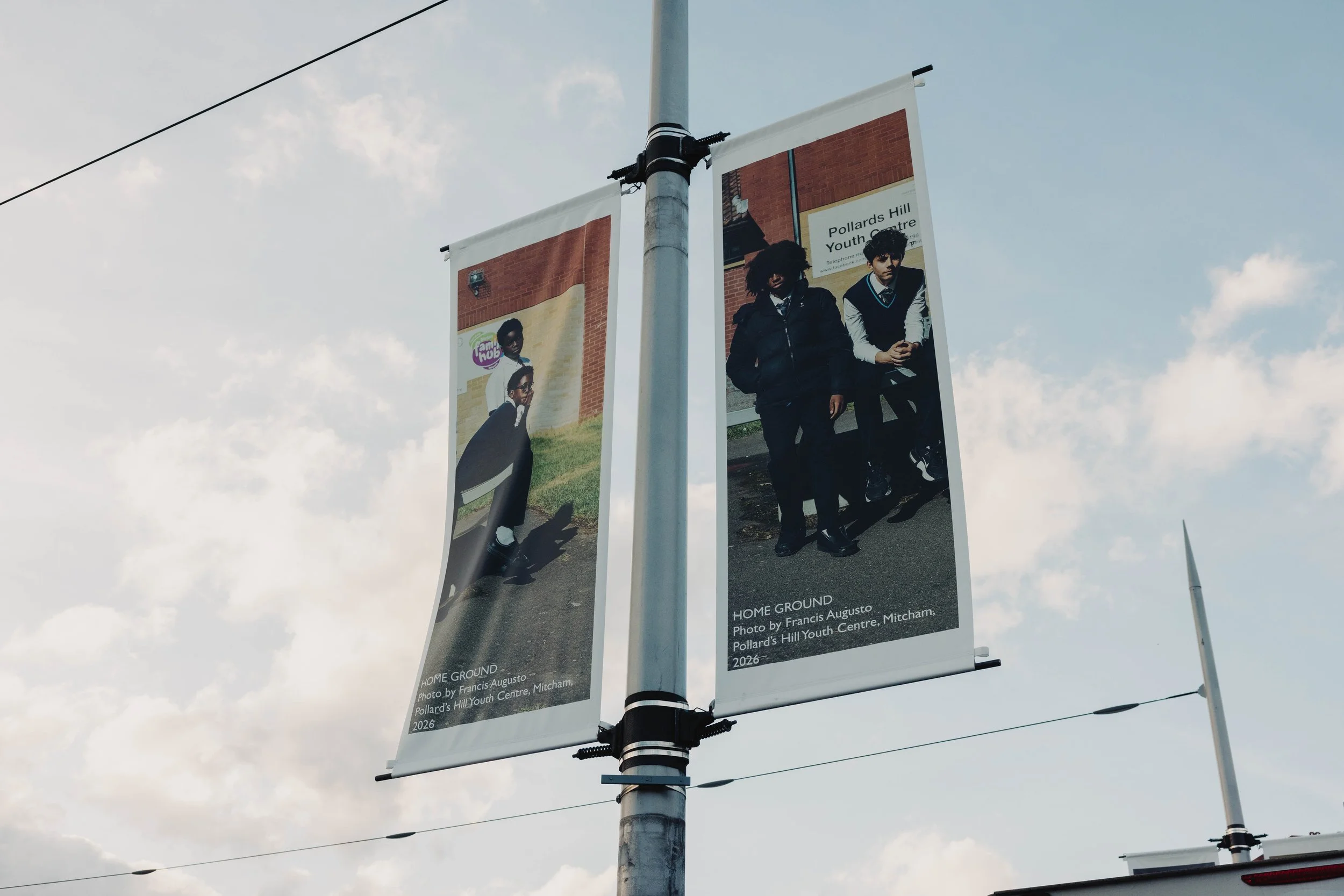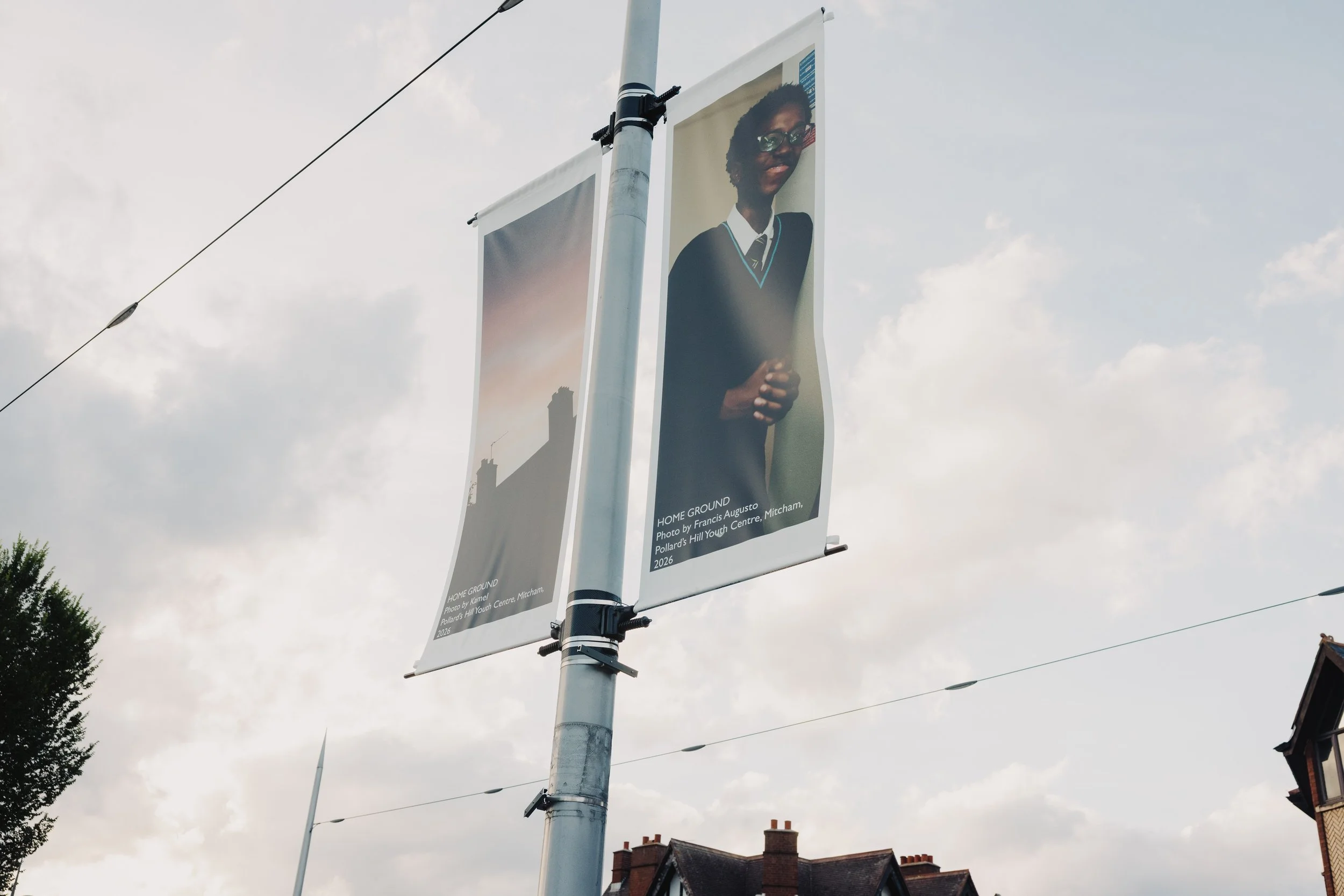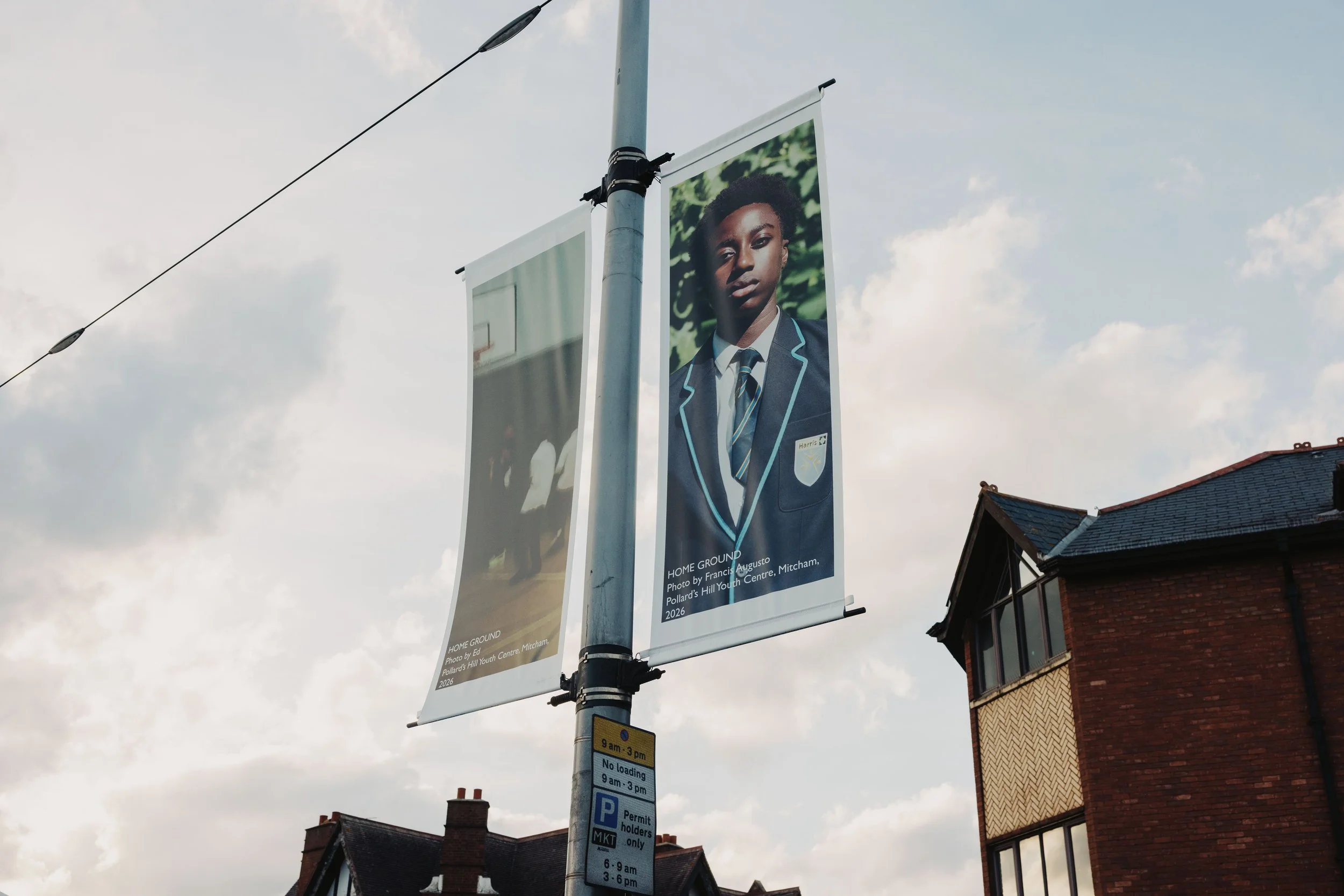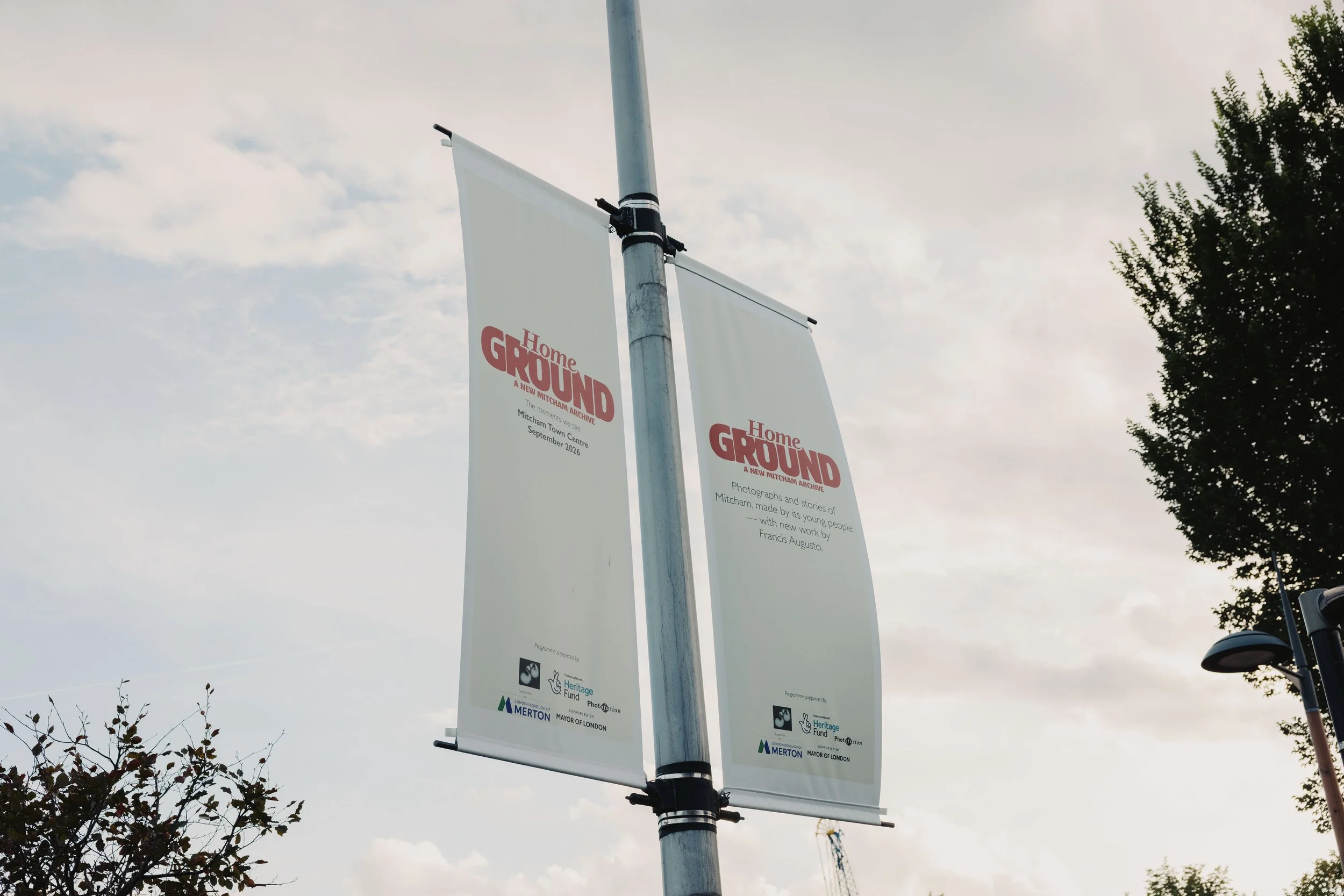
Home Ground is a participhotographic archive of Mitcham, made by the young people who live in it. participatory photographic programme for young people aged 13–16. Over eight weeks in the summer of 2026, a small group aged thirteen to fifteen were given film cameras, dictaphones, and one instruction: photograph the place you call your own. What they made was simple: their Mitcham, in their images and in their words.
Two convictions sit underneath Home Ground. The first is about heritage. We tend to speak of heritage as something already finished: preserved, kept behind glass in a museum, handed down from the people who came before. This project challenge that. It treats heritage as alive, as something still being made, right now. It’s in the ordinary places these young people move through every day: the bus stop, the chicken shop, the barber's. This challenge is about not waiting to become part of history. It’s about encouraging the young people to embrace the idea that they are history in the making. They are heritage, now. And the work of this project is to help them feel their worth within it.
The second conviction is about where art is allowed to belong. Ask which places make it onto a gallery wall, and which people, and the honest answer leaves out most of a city. The areas written up as dangerous, and the voices that come from them, are rarely the ones invited in to be celebrated. Home Ground puts it the other way round. It insists that this place too, our ends, is a place of beauty, and of a kind of excellence worth exhibiting. So rather than carry the work across the river to a room that would never have asked for it, we made the gallery here. For a month, Mitcham Town Centre, the market square these young people cross without a second thought, becomes the exhibition. That is what happens when we treat our own spaces as places of art and culture.
None of it works unless the young people own it, so the first week was spent handing it over. I came with the years of experience, but I am not the expert on being a teenager in Mitcham in 2026. They are. They are the experts of their own lives, their own streets, the things they notice that the rest of us walk past. So I asked them plainly: what do you want from this, and what can I actually do for you? If I was going to make something with them, they had to be in the design of it, because then, whatever we built, it would be theirs. That mattered to me, more than anything else we did.
From there the work moved slowly, and in order: from a word, to writing, to voice, and only then to image. Andre Anderson led an early session around three words, change, community, and courage, but its real subject was larger: how much it matters to have a space to set yourself down. A space that can stay entirely private and still change you. It doesn't have to be a journal. It can be a voice note, or writing over a beat you love. But the act of setting your experience down somewhere is how you loosen the tension we all carry, and how you catch the first sight of who you might become. One of the group wrote a thought they said they had never written before. Another went and bought a journal that week. Before a single photograph had been taken, that session had said the thing the whole project rests on: that their experience matters.
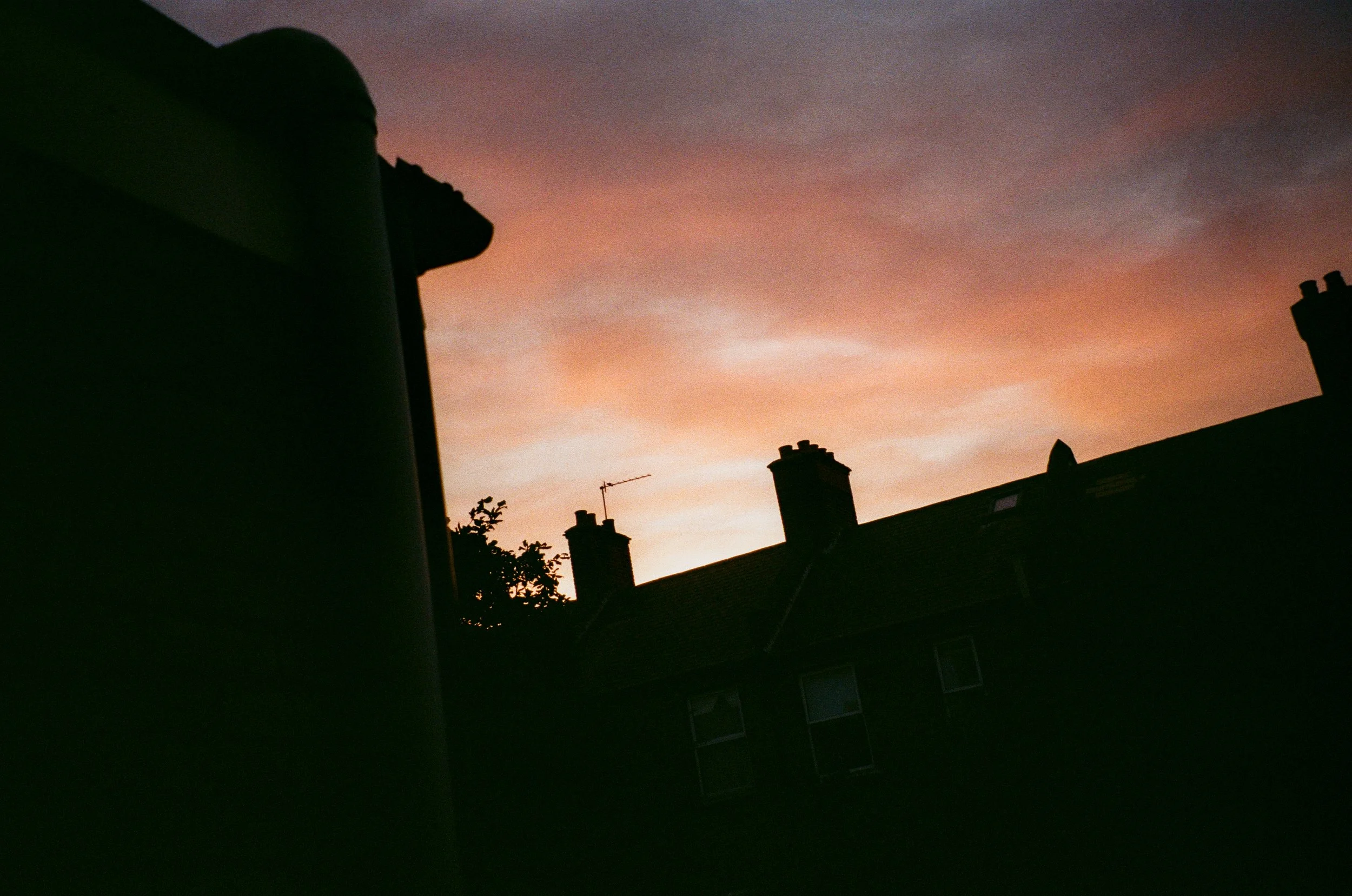
The pictures they brought back were entirely their own. K, fifteen, from Pollards Hill, on one of his: "I had to open my window to a certain extent to get the view, and the sunset kind of effect. I just like sunset things, so I thought I'd do one on my own." A rooftop at sunset, made for no reason other than that he found it beautiful — which is the whole argument of this project in a single frame.
And now that work goes up over the market, at the scale of the place itself, for a month. Every day, these young people, or their friends, their families, someone their age who has never once been asked to picture themselves this way, will pass through the town centre and find a version of themselves in their own high street. That is not a small thing. It is a young person from Mitcham being told, in public and at size, that they and their eye belong here.
If I hold on to one moment, it is the one where we sat together and looked at the work, choosing, disagreeing gently, saying why this frame and not that one. Nobody was made to collaborate; they arrived at it on their own, and found that their ideas mattered to each other as much as to me. "I got closer to my friends," N, fourteen, said of it, "and to people I didn't know before." A room of young people who had first drifted in for the snacks had become a group who made something together, and were proud of it. That is the part I most want to build on. The principles underneath Home Ground — handing young people real authorship, and treating their everyday as worthy of a wall — need not end in Mitcham, or at eight weeks. There is something much bigger here. This was only the seed.
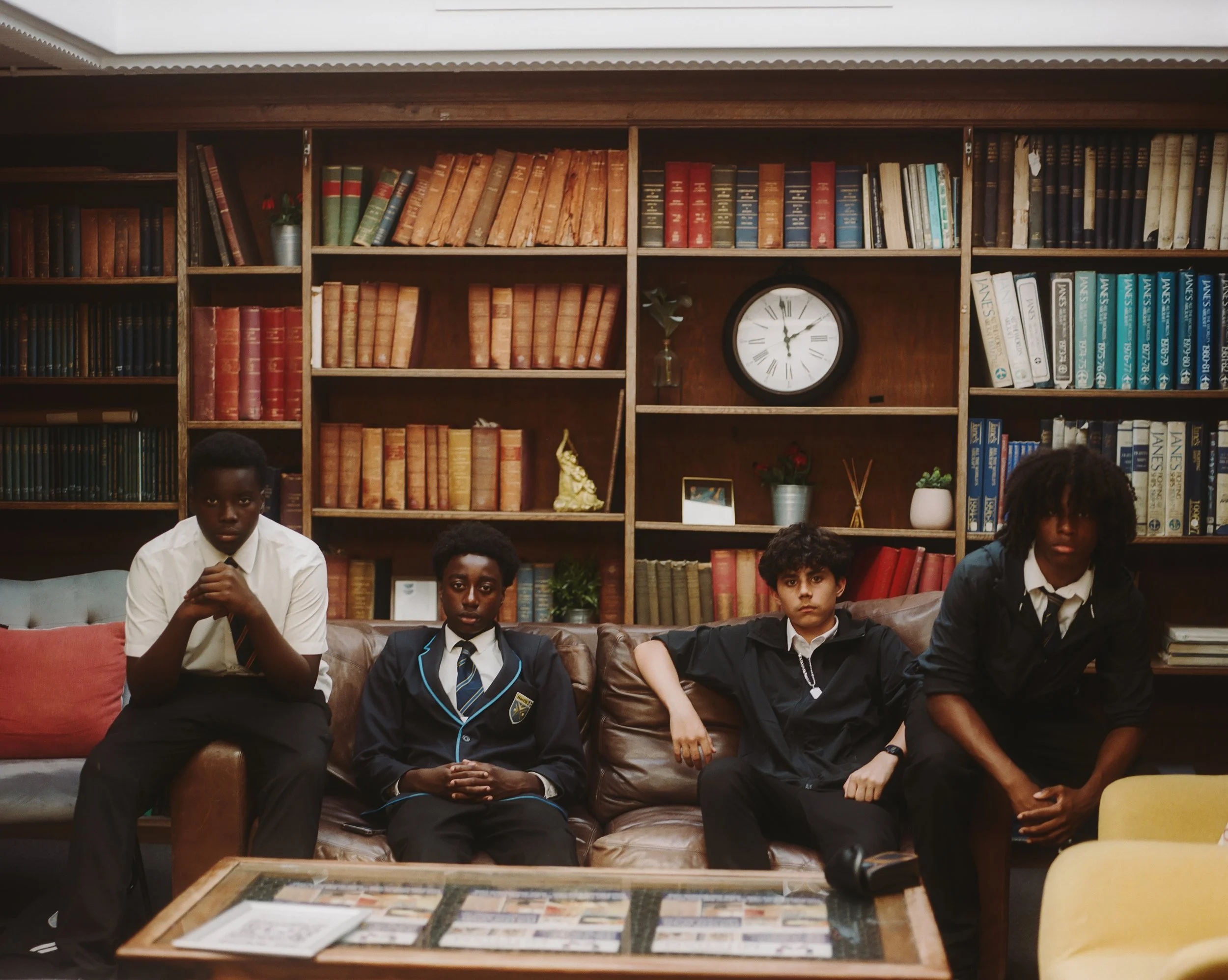
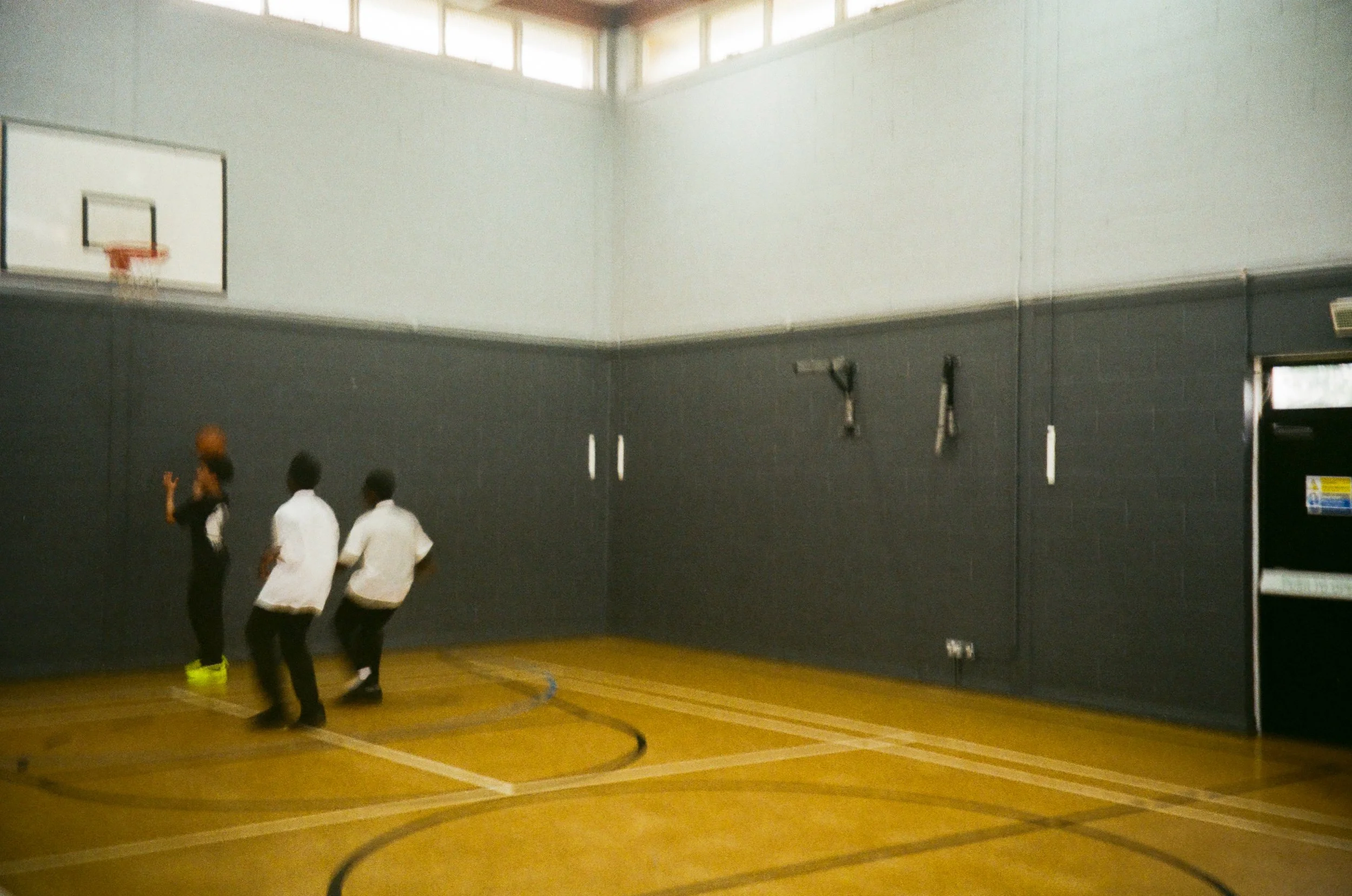
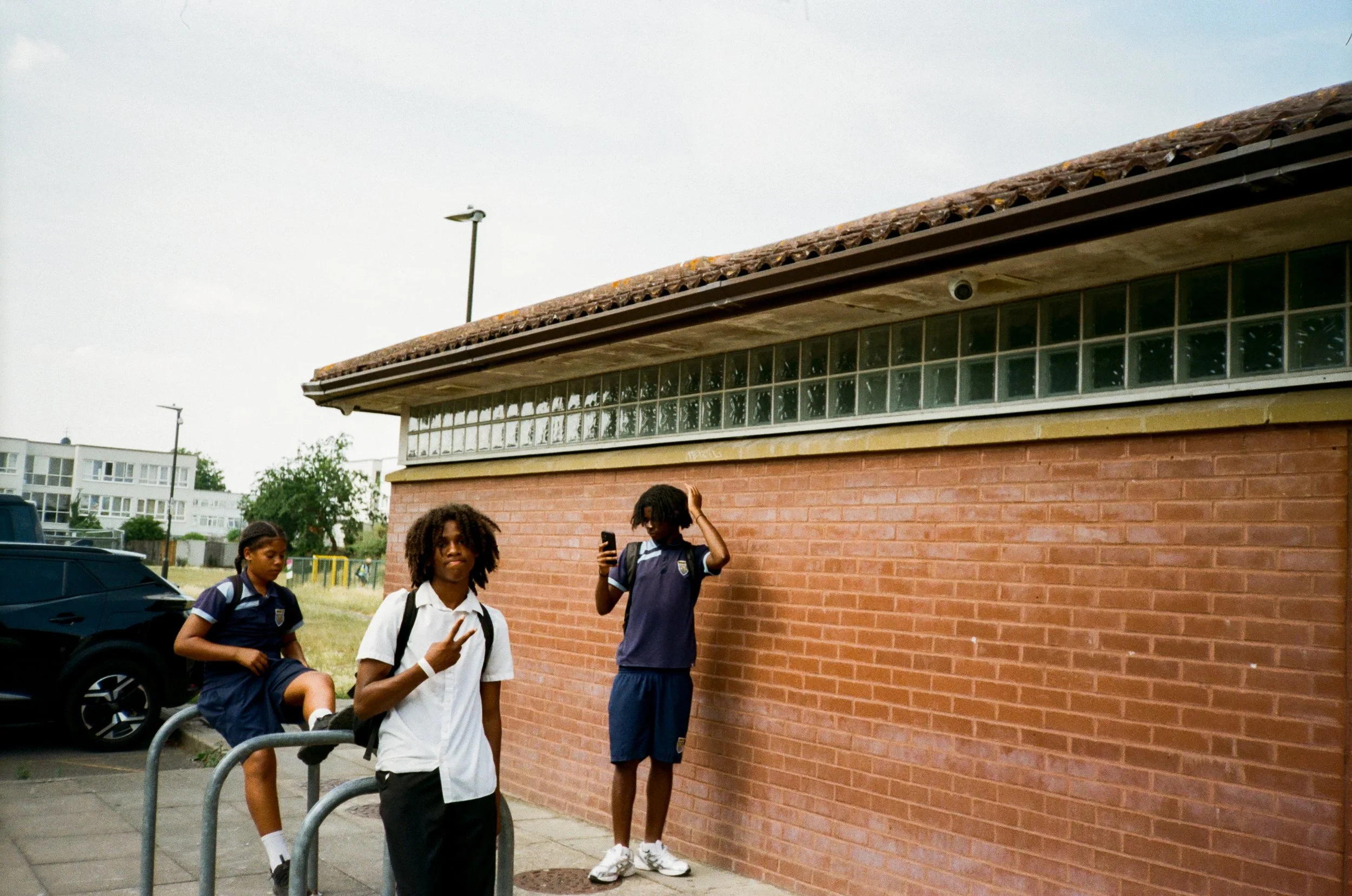
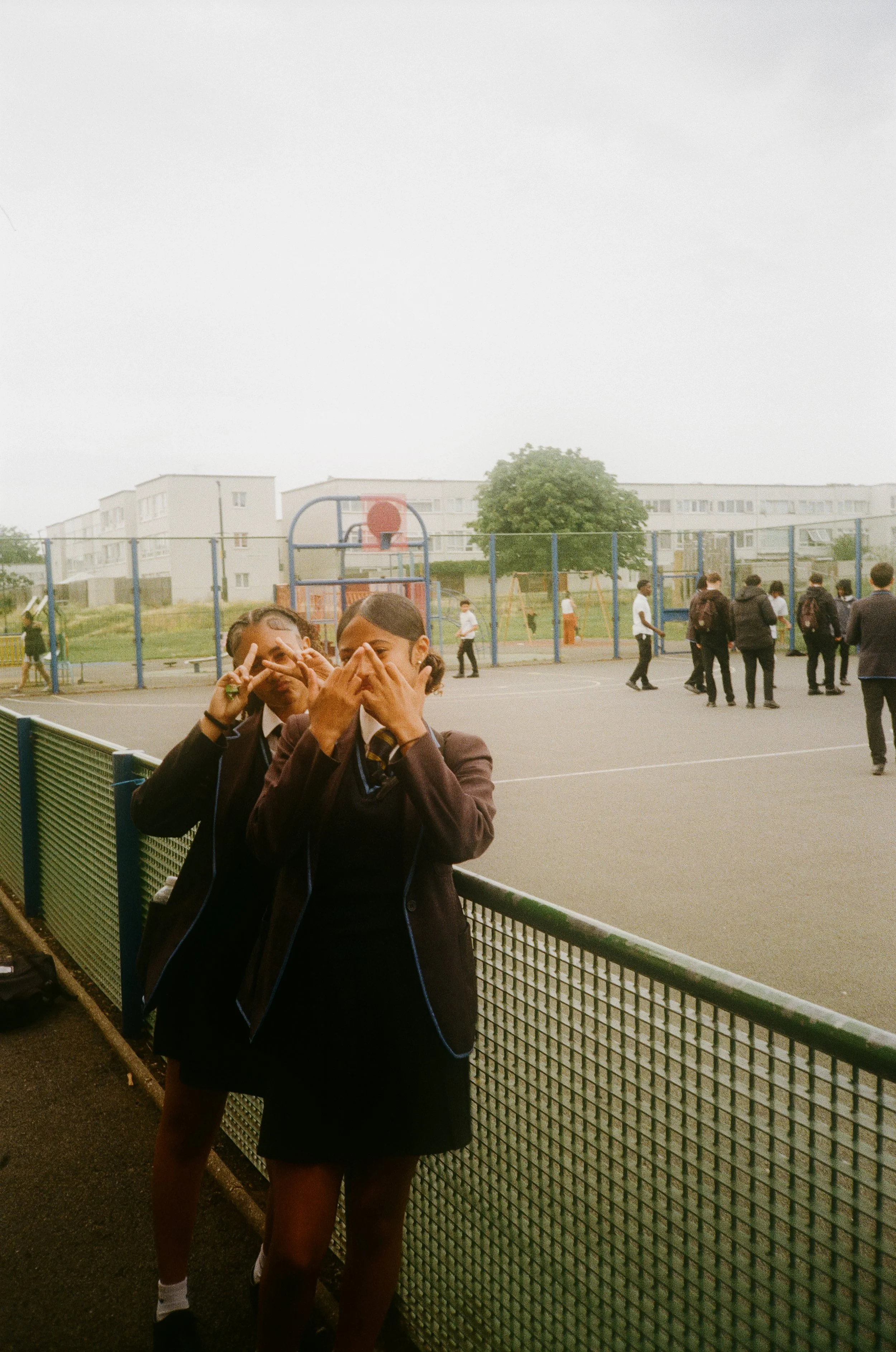
Below are works by the young people.